
Why UAE Architects Prefer Smart Architectural Glass Solutions
Architecture in the UAE has always had a strong relationship with glass. From the reflective towers of Dubai to luxury villas in Abu Dhabi and high-end hospitality developments across the country, glass is used to create openness, bring in natural light, and give buildings a distinctive identity.
But the role of glass is changing.
Architects are no longer choosing glass only because it looks elegant. They are looking for materials that can respond to privacy requirements, improve comfort, support energy-conscious design, and work with modern building automation.
This is where Architectural Glass UAE solutions are becoming increasingly important.
Smart glass allows a space to change according to how it is being used. A meeting room can remain transparent during normal working hours and become private when a confidential discussion begins. A luxury interior can maintain its open appearance without relying on conventional curtains or blinds. A modern building can incorporate glass while giving designers greater control over light and privacy.
For architects working on premium projects, this combination of appearance and functionality is difficult to ignore
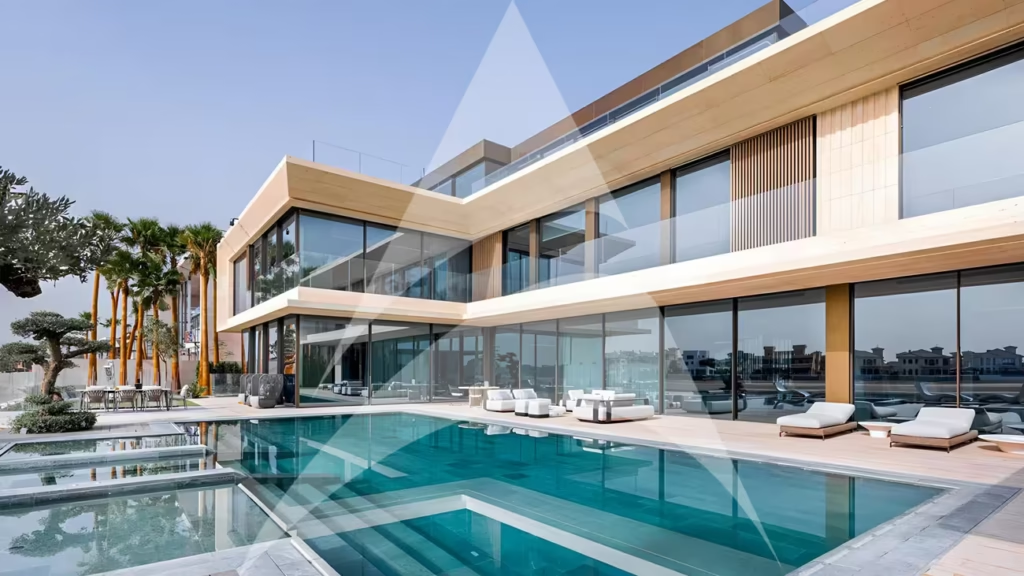
How Luxury Architecture in the UAE Has Evolved
The UAE’s architectural landscape has changed dramatically. Buildings are becoming more visually ambitious, while clients are becoming more demanding about comfort, technology, and sustainability.
A luxury project today is expected to offer more than expensive finishes
- Intelligent building features
- Flexible interior spaces
- Seamless indoor-outdoor connections
- Energy-conscious design
- Better privacy
- High-quality materials
- Minimal and refined aesthetics
This has pushed architects toward materials that can perform more than one role.
Glass is a good example.
A conventional glass partition provides visibility. A smart glass partition can provide visibility when required and privacy when needed. That difference gives architects another layer of control when planning a space.
Why There Is Growing Demand for Innovative Facade and Interior Solutions
The UAE’s premium property market includes luxury villas, five-star hotels, corporate headquarters, retail destinations, healthcare facilities, restaurants, and mixed-use developments.
Each type of project has different requirements.
A hotel may need privacy between a bedroom and bathroom without creating a visually heavy partition. A corporate office may require transparent meeting rooms that can become private during confidential meetings. A luxury villa may need large areas of glass without making every space permanently visible.
Traditional materials can solve some of these problems, but often at the cost of visual openness.
This is why architects are exploring Smart Building Materials Dubai and other intelligent architectural products that can combine design and functionality within the same installation.
The result is a more adaptable building rather than a collection of fixed spaces.
Smart Glass Is Changing Modern Architectural Design
Smart glass is one of the clearest examples of how technology is becoming part of architectural design.
The basic idea is simple: the glass can change its appearance according to the user’s needs.
With switchable glass technology, a transparent surface can become opaque or frosted when privacy is required. When transparency is needed again, it can return to its clear state.
Architectural Glass UAE for Flexible Interior Spaces
This makes smart glass particularly useful for areas such as:
- Meeting rooms
- Executive offices
- Boardrooms
- Hotel suites
- Luxury bathrooms
- Clinic consultation rooms
- Residential partitions
- Private lounges
Instead of installing curtains or blinds, architects can keep the original glass design intact while adding an intelligent privacy function.
For clients who prefer clean architectural lines, this can make a significant difference.
A Better Alternative to Permanent Privacy
Permanent walls provide privacy, but they also close off the space.
Smart glass offers another approach.
A room can remain visually connected to the surrounding environment when privacy is not necessary. When privacy is required, the same glass surface can become opaque.
This is especially valuable in premium offices and hospitality environments where openness and privacy need to coexist.
Sustainability and Premium Aesthetics Can Work Together
There is often a misconception that sustainable architecture has to look utilitarian.
The UAE continues to place strong emphasis on sustainable development and building performance. The UAE’s Net Zero 2050 Strategy specifically includes buildings among its focus sectors, while Dubai’s building regulations incorporate sustainability and environmental considerations.
For architects, this creates an opportunity to select materials that support both environmental goals and the visual character of a project.
Smart glass can contribute to this approach by helping manage solar exposure and daylight depending on the selected product and application. In the right design, it can support indoor comfort while maintaining the clean appearance that clients expect from luxury architecture.
Dubai Municipality’s green building framework also focuses on areas including energy efficiency, building design, occupant comfort, and resource efficiency.
Why Aesthetics Still Matter
Sustainability alone does not sell a premium property.
A luxury villa, hotel, or commercial building must also look exceptional.
This is where smart architectural glass has an advantage. Large glass surfaces can create a sense of openness, while the absence of bulky curtains and fixed partitions keeps interiors visually clean.
For architects, it becomes possible to pursue a minimalist design without giving up practical features.
Smart Glass in Luxury Hospitality Projects
Hotels and resorts are among the environments where architectural glass can have the greatest visual impact.
Guests expect privacy, comfort, and a memorable experience. At the same time, hotel designers want spaces to feel spacious and sophisticated.
Smart glass can be incorporated into:
Hotel Suites
A glass bathroom partition can remain transparent when desired and switch to a private state when the guest needs it.
Spa and Wellness Areas
Privacy can be controlled without creating visually heavy partitions.
Restaurants and Lounges
Glass can help separate areas while maintaining a sense of openness.
Executive and VIP Areas
Private meeting spaces can retain a premium appearance without relying on traditional blinds.
For hospitality brands, these details can become part of the overall guest experience.
Smart Glass for Commercial and Corporate Projects
Corporate architecture is also changing.
Open-plan offices remain popular, but companies still need private spaces for interviews, management meetings, financial discussions, and client conversations.
This creates a design challenge.
If too many rooms are permanently enclosed, the office can feel fragmented. If everything is open, privacy becomes difficult.
Smart glass provides a middle ground.
Architects can use glass partitions to maintain visual connection throughout the workplace while giving occupants control over privacy.
- Corporate headquarters
- Financial offices
- Law firms
- Consulting companies
- Co-working spaces
- Technology companies
- Executive offices
Why Luxury Glass Systems UAE Are Becoming More Popular
Premium clients expect materials to do more than simply look expensive.
They want technology that feels natural and easy to use.
That is one reason Luxury Glass Systems UAE are gaining attention in high-end architectural projects.
A well-designed smart glass installation can combine:
Design: Clean architectural lines and a premium finish.
Privacy: On-demand visual separation without conventional curtains.
Flexibility: Spaces can change according to their purpose.
Technology: Glass can become part of a wider smart building system.
Comfort: Properly selected glazing solutions can contribute to better indoor environmental control.
The important point is that these benefits do not have to be treated separately. A single architectural element can contribute to several aspects of the building.
WonderGlass Technologies and Smart Architectural Applications
At WonderGlass Technologies, smart glass is approached as an architectural solution rather than simply a technology product.
Our Smart Glass & Film Solutions are designed for projects where privacy, aesthetics, flexibility, and modern functionality need to work together.
Smart Glass for New Architectural Projects
For new construction and premium developments, smart glass can be incorporated into the architectural design from the beginning.
This allows architects and designers to consider:
- Glass dimensions
- Electrical requirements
- Frame details
- Privacy zones
- Control systems
- Interior finishes
Planning these elements early can create a cleaner final installation.
Smart Film for Existing Spaces
Not every project is a new building.
Existing offices, hotels, clinics, and residences may already have glass partitions that work well visually but lack privacy.
Smart Film provides an option for upgrading existing glass rather than replacing the complete partition.
This can be particularly useful during commercial renovations where minimizing disruption is important.
Applications Across Different Industries
The versatility of smart architectural glass makes it suitable for a wide range of projects.
Residential Architecture
Luxury villas can use smart glass for bathrooms, bedrooms, home offices, partitions, and entertainment areas.
The technology allows homeowners to control privacy without compromising the overall interior design.
Healthcare
Clinics and medical facilities need privacy while maintaining a clean and professional environment.
Smart glass can be used in consultation rooms and treatment areas where controlled visibility is important.
Hospitality
Hotels can use smart glass to add a premium touch to suites, bathrooms, spas, restaurants, and VIP spaces.
Corporate Offices
Smart glass can transform meeting rooms and executive offices into flexible spaces that adapt to different business requirements.
Retail and Commercial Interiors
Retailers can use intelligent glass to separate customer areas, display spaces, and private operational zones while maintaining a modern visual identity.
Why Architects Value Flexibility in Premium Projects
One of the biggest advantages of smart architectural solutions is flexibility.
A building may serve different users over its lifetime. An office could be redesigned several years later. A hotel may change its room configuration. A villa may be renovated as the family’s needs change.
Fixed architectural elements can make these changes expensive or complicated.
Smart glass provides a degree of adaptability without requiring major structural changes.
That is particularly valuable in the UAE, where premium developments often combine ambitious architecture with rapidly evolving technology.
The Future of Architectural Innovation in the UAE
The next generation of UAE architecture will likely be defined by the relationship between design and technology.
Buildings are becoming more connected. Automation, energy management, intelligent shading, smart lighting, and advanced glazing are increasingly being considered as part of one overall system.
For architects, this means material selection is becoming more strategic.
That shift is creating opportunities for Architectural Glass UAE solutions to play a larger role in luxury residential, commercial, hospitality, and institutional projects.
Dubai’s current building framework already places emphasis on sustainable development and building design that reduces environmental impact.
A More Intelligent Approach to Glass
Future projects will increasingly look for glass that can interact with its environment, occupants, and building systems.
The combination of transparency, privacy, daylight, energy considerations, and automation makes smart glass particularly relevant to this direction.
For architects, it offers another tool for creating spaces that feel open without sacrificing control.
What Makes Smart Architectural Glass a Premium Choice?
For a premium project, every visible detail matters.
A smart glass system should not feel like an afterthought added to an otherwise finished design. It should feel like part of the architecture.
The best results come from considering the glass system early and coordinating it with:
- Interior design
- Electrical planning
- Automation
- Structural requirements
- Lighting
- Privacy requirements
- Overall building aesthetics
This project-level approach is especially important for luxury developments, where small details can influence the final appearance.
Why WonderGlass Technologies for Premium UAE Projects?
WonderGlass Technologies focuses on architectural solutions for clients who expect a combination of design quality and practical performance.
Our smart glass solutions are suitable for premium residential, commercial, hospitality, healthcare, and corporate environments.
Rather than applying the same solution to every project, the appropriate glass technology should be selected based on the building, application, privacy requirements, design intent, and installation conditions.
That is where professional consultation becomes valuable.
For architects, developers, and interior designers planning a premium project, the goal is not simply to install smart glass. It is to integrate the technology so naturally that it becomes part of the architecture itself.
Final Thoughts
The UAE has become known for ambitious architecture, and expectations continue to rise.
Architects are now looking for materials that can deliver more than visual appeal. They need solutions that support flexibility, privacy, comfort, sustainability, and intelligent building design.
Smart architectural glass answers many of these requirements in one elegant system.
From luxury villas and hotels to corporate headquarters and healthcare facilities, Architectural Glass UAE solutions are helping designers rethink how glass can function within modern buildings.
For premium projects, the future is not about choosing between technology and beautiful architecture.
It is about bringing the two together.
FAQ's
Smart architectural glass is an electrically controlled glass solution that can change its visual state, most commonly from transparent to opaque, when connected to a suitable power and control system. This allows architects and building occupants to control privacy without installing conventional curtains, blinds, or permanent solid partitions.
In practical terms, the glass can remain clear when an open visual connection is wanted and become frosted when privacy is required. This makes it useful in meeting rooms, executive offices, hotel suites, healthcare spaces, luxury bathrooms, and residential interiors.
The technology is particularly valuable in premium UAE projects because it combines a clean architectural appearance with a practical function. WonderGlass Technologies provides Smart Glass & Film solutions that can be customized according to the project’s design, dimensions, control requirements, and intended application.
Smart glass can be used in many residential, commercial, hospitality, healthcare, and corporate environments. Common applications include meeting rooms, boardrooms, executive offices, hotel suites, bathroom partitions, clinic consultation rooms, luxury villas, private lounges, and selected retail or commercial interiors.
The main advantage is that the same glass surface can serve different purposes at different times. A meeting room can remain visually open when collaboration is taking place and become private when a confidential conversation starts. A hotel bathroom can maintain an open luxury aesthetic while still offering guests control over privacy.
The right application depends on the project’s architecture, glass dimensions, electrical requirements, privacy expectations, and intended frequency of use. A site assessment and design consultation are therefore important before selecting the final solution.
Smart Film can be a practical choice when an existing office already has glass partitions that the client wants to retain. Instead of removing the current glazing and installing completely new smart glass, Smart Film can be applied to suitable existing glass surfaces to introduce switchable privacy functionality.
This makes it particularly useful for office renovations, meeting rooms, executive cabins, clinics, hotels, and other spaces where replacing existing partitions could increase project time, cost, or disruption.
Smart Glass, on the other hand, is generally considered when the glazing is being specified as part of a new installation or major architectural project. The choice between the two should be based on the existing glass condition, dimensions, frame configuration, electrical requirements, desired appearance, and long-term project objectives.
WonderGlass Technologies can assess the application and recommend the more suitable option for the specific project.
Yes, smart glass can be designed to work with appropriate control systems, depending on the product and project requirements. It can typically be operated using a wall switch, remote control, or a compatible automation setup. For larger projects, the control approach can be coordinated with the wider electrical and building automation design.
This creates opportunities for architects and developers to make privacy control part of the building’s overall user experience. For example, a meeting room can have a dedicated privacy control, while a luxury residential project may incorporate glass controls into its smart-home interface.
However, automation compatibility should be discussed during the design stage rather than treated as an afterthought. Electrical provisions, control equipment, wiring routes, and integration requirements need to be considered before installation.
Smart glass can contribute to energy-conscious building design, but its actual performance depends on the specific glass specification, orientation, glazing system, control method, and overall building design.
One important consideration in the UAE is solar exposure. Appropriate glazing solutions can help manage daylight and solar heat, potentially reducing the cooling demand associated with excessive heat gain. Smart glass may therefore form part of a broader strategy for improving indoor comfort and building performance.
It is important not to treat smart glass as a guaranteed energy-saving solution by itself. Architects should consider the complete façade or interior glazing specification, HVAC design, shading strategy, orientation, and local building requirements.
Dubai’s building framework places emphasis on sustainable development and building performance, making material selection an important part of modern architectural planning.
Architects choose smart architectural glass because it allows them to combine visual openness with practical privacy. Traditional partitions can make premium interiors feel closed, while completely transparent glass may not provide enough privacy for every situation. Smart glass creates a middle ground.
It also fits naturally into contemporary design styles where clean lines, minimal visual clutter, and premium finishes are important. There is no need to rely on large curtains or blinds to achieve visual separation, which can help preserve the intended appearance of the space.
For luxury villas, hotels, offices, and commercial developments, smart glass can also become a visible feature that demonstrates the project’s use of advanced technology.
The final result depends on proper product selection, engineering, installation, and integration. For this reason, architects often involve a specialist early in the design process rather than selecting the glass at the final construction stage.