
Hotel Smart Glass UAE: Transforming Luxury Hotels into Memorable Guest Experiences
In luxury hospitality, the guest experience is shaped by more than the room size, furniture or view. Privacy, lighting, layout and the way different areas connect can influence how comfortable and considered a hotel room feels.
This is one reason smart glass is becoming an interesting option for modern hospitality design.
Hotel Smart Glass UAE projects can use switchable glass technology to create spaces where transparency and visual privacy can be adjusted according to the situation. A glass partition may remain transparent when an open appearance is preferred and switch to a privacy state when guests need more separation.
For hotels in Dubai, Abu Dhabi and other parts of the UAE, this technology offers architects and designers another way to balance contemporary aesthetics with practical guest requirements.
The real value lies in choosing the right application. Smart glass is not necessary everywhere, but in carefully selected spaces, it can make the interior more adaptable.
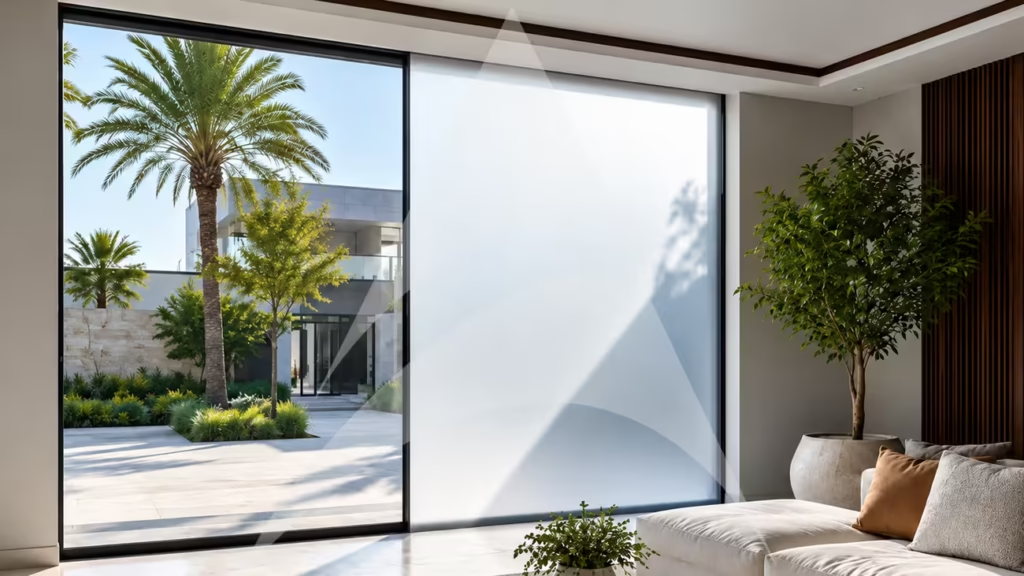
Where Intelligent Glass Can Add a Premium Touch
Smart glass is glazing technology that can change its visual state when activated. Depending on the selected system, the glass can switch between a transparent state and a privacy state.
Unlike a conventional frosted glass panel, which generally provides permanent visual screening, switchable smart glass allows the privacy condition to change.
In a hotel, this can support a more flexible approach to interior design.
Potential applications include:
- Guest room and suite partitions.
- Selected bathroom enclosures.
- Executive suites and private lounges.
- Spa and wellness areas.
- Meeting rooms and VIP spaces.
- Private dining areas.
The technology is particularly relevant when a designer wants to preserve the appearance of an open interior without permanently sacrificing visual privacy.
However, smart glass should be selected according to the intended application, technical requirements and operating conditions. Its suitability for a specific wet area, for example, must be confirmed with the manufacturer.
Guest Room and Suite Applications
Hotel Smart Glass UAE
Guest rooms and suites are among the most relevant settings for smart glass because they often combine sleeping, bathing, dressing and relaxation areas within a limited floor plan.
The challenge is to create a room that feels spacious while still providing the privacy guests expect.
Bedroom and Bathroom Partitions
A transparent glass partition can create a visual connection between the bedroom and bathroom, helping the suite feel more open.
When privacy is needed, switchable glass can change to its privacy state, depending on the selected system.
This approach may suit contemporary hotel suites where designers want to reduce the visual weight of conventional partitions.
Dressing Areas
Smart glass can also be considered for selected dressing-area partitions. It allows designers to maintain a visually open layout while providing the option of privacy.
Premium Suites
In larger suites, glass can help distinguish different functional zones without making the interior feel fragmented.
The design should still account for lighting, controls, door arrangements, cleaning and guest usability. Privacy controls should be intuitive, clearly explained and easy to operate.
Smart Glass in Spas, Restaurants and VIP Areas
The use of smart glass is not limited to guest rooms. Hospitality properties contain several spaces where privacy requirements change according to the activity taking place.
Spas and Wellness Areas
Wellness spaces often benefit from a calm, uncluttered appearance. Smart glass may be considered for selected treatment rooms or private wellness areas where adjustable visual privacy is useful.
For wet environments, the specific glass system and installation must be approved for the intended conditions.
Private Dining Areas
Restaurants within luxury hotels may include private dining rooms for families, business meetings or special occasions.
Smart glass can provide an option for changing the visual separation between a private dining space and the surrounding restaurant, where the system’s configuration allows it.
VIP Lounges and Meeting Rooms
VIP areas, executive lounges and hotel meeting rooms may require different levels of privacy throughout the day.
Smart glass can help maintain visual openness when privacy is not needed and provide a privacy state for selected activities.
In each application, the design team should consider whether switchable glass offers a genuine operational benefit or whether conventional glazing would meet the requirement more simply.
Balancing Privacy With an Open Luxury Feel
One of the main design challenges in hospitality is creating a sense of openness without making guests feel exposed.
Traditional opaque partitions provide clear separation, but they can interrupt sightlines and make some interiors feel smaller. Transparent glass preserves visual connection, but it may not provide the privacy required for every activity.
Hotel Privacy Glass offers different ways to address this balance, depending on whether the project requires permanent or adjustable privacy.
Solution | Main Function | Consideration |
Clear glass | Maintains transparency and visual connection | Does not provide visual privacy |
Frosted glass | Provides permanent visual screening | Cannot switch back to full transparency |
Switchable smart glass | Allows adjustable visual privacy | Requires suitable controls and technical coordination |
Solid partition | Provides physical separation | Reduces visual connection between spaces |
This comparison helps explain why smart glass can be useful in selected hospitality environments. It is not automatically the right choice for every room, and it should not be confused with acoustic insulation or thermal-control glazing.
If sound privacy is important, the complete partition assembly—including doors, seals and surrounding construction—must be evaluated separately.
Designing Technology That Guests Notice Without Seeing the Mechanism
In a well-designed hotel interior, technology should feel natural to the guest.
Smart glass should complement the architecture rather than dominate it. Its controls, electrical components and installation details need to be integrated into the room design from the beginning.
Several factors deserve attention.
Simple Guest Controls
Guests should understand how to change the glass state without needing complicated instructions. The control method should be easy to find and operate.
Lighting and Reflections
Large glass surfaces interact with daylight and artificial lighting. Designers should consider reflections, glare and the visual relationship between adjoining rooms.
Maintenance and Housekeeping
Hotel rooms experience regular cleaning and frequent guest turnover. The selected system should have practical maintenance procedures, and staff should understand its operation.
Electrical and Technical Coordination
Switchable smart glass requires appropriate electrical and control arrangements. These should be coordinated with the building services and the requirements of the selected product.
Safety and Wet-Area Suitability
Bathrooms, shower enclosures and other wet areas require particular attention. The manufacturer should confirm whether the proposed product and installation method are suitable for the intended environment.
A visually impressive installation is only successful when it remains practical for guests, housekeeping teams and hotel maintenance staff.
Luxury Hotel Glass Solutions UAE: Planning for the Complete Project
Smart glass should be considered as part of the hotel’s overall architectural strategy rather than as an isolated decorative feature.
Before specifying the system, hotel owners, architects and interior designers should establish:
- The purpose of the space: Identify where adjustable privacy provides a genuine benefit.
- The expected use: Consider how frequently guests or staff will operate the glass.
- The technical requirements: Review glass configuration, controls, electrical infrastructure and installation conditions.
- The guest experience: Make sure the controls are intuitive and privacy expectations are clear.
- The maintenance plan: Consider cleaning, inspections, servicing and the availability of technical support.
- The project budget: Compare the additional cost and complexity with the practical value the system provides.
- The applicable requirements: Check relevant building, safety and project specifications before installation.
For hospitality projects in the UAE, these decisions should be coordinated with the wider design and construction team.
Smart glass may be a valuable choice for selected suites or private areas without needing to be installed throughout the entire property.
Why Smart Glass Is Relevant to Hospitality Design in Dubai
Dubai’s hospitality market includes luxury hotels, resorts, serviced residences and premium developments where interior design plays an important role in the guest experience.
Within these settings, smart glass offers a way to manage visual privacy while retaining a contemporary glass aesthetic.
For example, a hotel suite can use glass to maintain a connection between the bedroom and bathroom, while a private meeting room can use switchable glazing to change its visual separation from an adjoining space.
These applications address different needs, but both rely on the same design principle: the level of visual privacy should suit the way the space is being used.
The suitability of each application depends on the selected system, installation details, operational requirements and project specifications. Smart glass should be assessed alongside other architectural considerations rather than treated as a universal solution.
WonderGlass Smart Glass Solutions for Hospitality Projects
WonderGlass Technologies provides smart glass and film solutions for modern architectural applications in the UAE.
For hotels and hospitality developments, smart glass can be considered for suitable interior spaces where privacy and transparency need to work together.
The right approach depends on the design intent, the function of the space and the technical requirements of the project. Hotel teams should evaluate product suitability, control arrangements, maintenance and installation requirements before finalising the specification.
Explore WonderGlass Smart Glass & Film Solutions:
https://wonderglass.ae/smart-glass-and-film-solutions-in-uae/
FAQ's
Hotel smart glass is switchable glazing that can change between transparent and privacy states when activated, depending on the selected technology. It can be considered for guest suites, selected bathroom partitions, meeting rooms and other hospitality spaces where adjustable visual privacy is useful.
Smart glass can give guests greater control over visual privacy while preserving an open, contemporary interior appearance. Its value depends on the application, ease of operation and how well the technology is integrated into the room design.
Potential applications include guest room partitions, selected bathroom enclosures, private lounges, meeting rooms, spa areas and VIP spaces. The product must be suitable for the specific environment, particularly in areas exposed to water or moisture.
Neither option is universally better. Frosted glass provides permanent visual privacy, while switchable smart glass allows the visual state to change. Smart glass may be preferable when adjustable privacy is useful; frosted glass may be simpler when permanent privacy is sufficient.
It can be considered for selected bathroom applications, but not every smart glass product is suitable for direct exposure to water or steam. The manufacturer should confirm product suitability, electrical protection, sealing and installation requirements for the intended wet area.
Hotel owners should assess the intended application, privacy needs, ease of operation, electrical requirements, installation conditions, maintenance, budget and applicable safety requirements. Guest usability and housekeeping procedures should also be considered during planning.