
Creating Flexible Luxury Spaces with Movable and Automated Glass Systems in the UAE
Luxury architecture is increasingly moving away from spaces that have only one purpose.
A living room may need to become an entertaining area. A meeting room may need to function as an open collaboration space. A hotel lounge may need to accommodate private events. A large residential area may need to feel open during the day and more private later.
This changing requirement is creating interest in Automated Glass Systems UAE projects.
Movable and automated glass systems can help architects create spaces that are easier to adapt without relying entirely on permanent walls. Depending on the technology, glass can be moved, opened, closed, or switched between transparent and privacy conditions.
The important distinction is that automated movement and smart glass are not the same technology. Movable glass systems physically change the configuration of a space, while switchable smart glass changes the visual privacy of the glass. Some projects may benefit from one approach, while others may use different technologies for different functions.
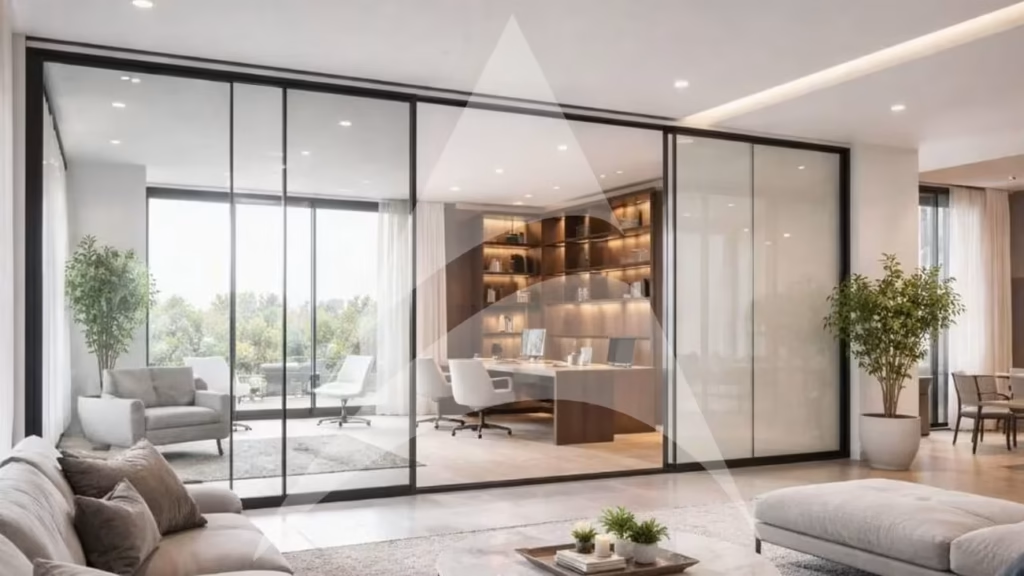
Why Fixed Spaces Are Becoming Less Practical
Permanent walls are effective when a space has one clearly defined purpose.
But luxury properties and premium commercial spaces often need greater flexibility.
A large room may need to accommodate different activities throughout the day. Building separate rooms for every function can consume valuable floor area and reduce visual connection between spaces.
This is where adaptable architecture becomes useful.
Instead of asking:
“How many rooms should this building have?”
Architects can also ask:
“How can this space serve multiple purposes?”
That change in thinking can influence everything from partition design to furniture, lighting and glass systems.
The Growing Demand for Adaptable Interiors
Flexible design is particularly relevant to high-end properties because the value of a space is not determined only by its size.
How effectively that space can be used also matters.
A flexible interior can allow one area to support several functions without permanently changing the architectural layout.
For example:
- A large living area can be divided when privacy is required.
- A boardroom can become part of an open office environment.
- A hotel lounge can be configured for private functions.
- A showroom can create temporary consultation areas.
- A luxury residence can separate entertainment and private zones.
Movable Glass Systems UAE projects can support this type of planning when the design requires physical movement or reconfiguration of glass elements.
What Are Automated Glass Systems?
Automated glass systems use mechanical or motorised components to control the movement or position of glass elements.
Depending on the system, this can involve opening, closing, sliding, folding or otherwise repositioning glass panels.
The purpose is straightforward:
To make the relationship between spaces more adaptable.
Instead of manually removing or rearranging a permanent partition, users can operate the designed system according to the intended application.
However, automation should not be added simply because a project is considered “smart.”
The system should solve a genuine spatial or operational requirement.
Automated Glass vs Smart Glass: What's the Difference?
These technologies are often discussed together, but they solve different problems.
Feature | Automated / Movable Glass | Smart Glass |
|---|---|---|
| Main function | Changes the physical configuration of a space | Changes visual privacy |
| Physical movement | Yes, depending on system | Not necessarily |
| Privacy control | Can provide privacy by closing or repositioning panels | Can change between transparent and privacy states |
| Space flexibility | High where opening or closing is required | High where visual privacy changes are required |
| Typical applications | Large openings, adaptable rooms, partitions | Offices, meeting rooms, residential and wellness spaces |
| Main design question | “Should this space be open or closed?” | “Should this glass be transparent or private?” |
This distinction is important when planning Smart Glass Architecture UAE projects.
A smart glass partition does not automatically replace a movable glass system, and a movable glass system does not automatically provide switchable privacy.
The appropriate technology depends on the problem the architect is trying to solve.
How Automated Glass Can Change a Space
The biggest architectural advantage of automation is control.
A space can be designed to support different configurations without permanently committing the floor plan to one arrangement.
Open Configuration
Glass panels can create a visually continuous environment when openness is preferred.
Divided Configuration
The same area can be separated into distinct zones when privacy or functional separation is needed.
Event Configuration
Hospitality and commercial spaces can be arranged differently depending on the type of event or activity taking place.
This flexibility can be particularly valuable in premium developments where spaces are expected to perform multiple functions.
Creating Multi-Purpose Areas in Luxury Properties
Luxury residential architecture often includes large open-plan spaces.
But open-plan does not always mean that every activity should happen in one uninterrupted area.
A family may want:
- An open entertainment area during a gathering
- A quieter private zone later
- A dedicated dining environment
- A separate workspace during working hours
Movable glass can provide a way to create these zones without making the entire interior permanently enclosed.
For architects, this means the design can respond to changing use rather than forcing the occupants to adapt to a fixed layout.
Smart Glass Architecture for Privacy
Not every flexibility requirement involves physically moving glass.
Sometimes the structure can remain exactly where it is, but the level of visual privacy needs to change.
This is where smart glass can be useful.
A switchable smart glass system can change its visual state when activated, allowing a space to move between transparency and a privacy condition depending on the selected technology.
For example, an executive meeting room may remain visually connected to the surrounding office when not in use. During a confidential meeting, the glass can provide a different level of visual privacy.
Similar applications can include:
- Private offices
- Boardrooms
- Consultation rooms
- Luxury residential interiors
- Wellness spaces
- Hotel environments
The main benefit is not simply the technology itself. It is the ability to change the visual character of a space without physically replacing the partition.
Applications in Hospitality, Offices and Luxury Residences
Luxury Residences
Movable or smart glass can help separate living, dining, working and private areas while preserving a sense of openness.
Corporate Offices
Flexible glass systems can support meeting rooms, executive spaces and collaboration areas that need to adapt to different working requirements.
Hotels
Hospitality spaces frequently change according to events, guest requirements and operational needs. Adaptable glass can help create different spatial arrangements while maintaining a refined interior appearance.
Showrooms
A showroom may need open product displays during normal operation and more private consultation areas at other times.
High-End Commercial Interiors
Flexible glass can help businesses use valuable floor space for different functions without constructing permanent partitions for every requirement.
Planning Flexible Glass Architecture from the Beginning
Automated systems should be considered during the design stage rather than treated as an afterthought.
Architects, designers and project teams should evaluate several factors.
1. Define the Purpose
First identify why the space needs to change.
Is the requirement:
- Physical opening?
- Privacy?
- Flexible zoning?
- Event configuration?
- Better visual connection?
The answer determines which technology should be considered.
2. Consider the Building Layout
The available space, ceiling conditions, structural elements and circulation paths can influence how a movable glass system can be integrated.
3. Plan Electrical and Control Requirements
Automated and smart systems may require electrical infrastructure and control components. These should be coordinated with the wider building design.
4. Consider Acoustic Requirements
A glass system should not be selected based only on appearance. Where privacy and sound control are important, the complete partition assembly needs to be evaluated.
5. Consider Maintenance
Moving components, controls and large glass surfaces require appropriate access for inspection, cleaning and maintenance.
6. Review Safety and Project Requirements
The selected system should be appropriate for its intended application and reviewed against applicable project requirements and regulations.
For Dubai projects, the Dubai Building Code establishes minimum requirements covering areas including health, safety, building design and sustainable development.
Flexibility and Sustainable Building Design
Flexible architecture can also contribute to more efficient use of space, although the environmental performance of a glass system depends on its specification and the wider building design.
Dubai’s Al Sa’fat Green Building System focuses on building performance, including energy and resource efficiency, and encourages integration of green technologies into building design.
This makes it useful to think about automated glass as part of the complete architectural system rather than as an isolated technology.
Glass selection, solar exposure, shading, HVAC design, lighting and building controls can all influence the overall performance of a project.
An automated glass system should therefore support the project’s architectural and operational objectives—not be specified simply because automation is available.
What Should You Consider Before Choosing an Automated Glass System?
Before selecting a system, ask:
- Does the space genuinely need to change configuration?
- Is physical movement or variable privacy the main requirement?
- How frequently will the system be operated?
- What level of acoustic separation is required?
- What electrical and control infrastructure is needed?
- How will the system be maintained?
- Does the design work with the existing architecture?
- Are applicable building and safety requirements being considered?
These questions can help prevent a technology-led decision and keep the focus on the actual needs of the building.
The Role of WonderGlass in Flexible Architectural Design
WonderGlass Technologies provides modern architectural glass solutions for residential, commercial and hospitality applications in the UAE.
For projects where transparency and privacy need to work together, Smart Glass can be considered as part of a flexible interior strategy.
The right approach depends on the project. Some spaces may benefit from physical movement, while others may need switchable privacy. In some designs, different glass technologies may serve different areas of the same property.
The starting point should always be the intended use of the space.
Explore WonderGlass Smart Glass & Film Solutions:
https://wonderglass.ae/smart-glass-and-film-solutions-in-uae/
FAQ's
Automated glass systems are glass-based architectural systems that use motorised or automated mechanisms to control the movement or position of glass elements. Depending on the system, panels may slide, fold, open or close to change how a space is configured.
Automated glass generally changes the physical configuration of a space by moving glass panels. Smart glass changes the visual state of the glass, typically between transparent and a privacy condition. They address different architectural requirements.
Movable glass systems can be considered for luxury residences, offices, hotels, showrooms, meeting areas and other spaces where physical separation needs to change according to different activities.
Smart glass can be suitable for luxury homes where occupants want to control visual privacy while maintaining the appearance and openness of glass. Potential applications include home offices, wellness areas, bathrooms, bedrooms and other private spaces, subject to the project’s requirements.
Motorised automated glass systems generally require electrical infrastructure to operate their control and movement mechanisms. Smart glass also requires an appropriate electrical connection for switching its visual state. Exact requirements depend on the selected system.
Architects should consider the intended use, available space, movement requirements, structural and ceiling conditions, electrical infrastructure, acoustic needs, safety, maintenance and applicable project requirements before selecting a system.